Manufacturers use molding processes to create high-volume orders of precision components, prototypes, and everything in between. There are multiple different types of molding processes available, with blow molding and injection molding being popular options. Both can create high-quality parts that meet tight tolerances and budget requirements. However, there are key differences between the two processes that are important to understand before selecting the right fit for your next production order.

Click to Enlarge
Ultimately, blow molding and injection molding are used to create different types of products. In injection molding, fluid plastic or rubber material is injected into a mold at high speeds and temperatures, filling the mold without gaps or air bubbles. It produces solid components that have the precise dimensions established by the mold. Injection molding manufacturers can also create hollow goods by creating two molded halves that are sealed together.
Blow molding processes, on the other hand, are used to create hollow products, like bottles, by following the same basic process as glassblowing. First, manufacturers heat a plastic tube and expand it with air until it resembles a balloon. Then manufacturers clamp a mold in place over the balloon, or parson, to form the fluid plastic into a specific shape. This results in a seamless construction. However, some common defects or vulnerabilities in blow-molded containers include:
While both processes are cost-effective and reliable, the type of product you want to produce is the main deciding factor in which process you should select.
Injection molding is a versatile option for producing components and products of virtually any shape, profile, or application. Some of the key advantages of injection molding include:
Blow molding processes also offer distinct advantages for orders that require the production of hollow goods, including:
Both blow molding and injection molding can quickly and efficiently produce plastic goods. But injection molding is commonly used to create solid plastic parts and products with a filled interior, and blow molding creates seamless, hollow parts, such as bottles and hollow toys. Because the two processes produce different types of plastic goods, the applications for each method differ.
The most common applications for blow molding include bottles and other types of packaging. These products account for about 49% of blow molding processes around the world, especially for industries that require one-piece bottles at high volumes and with fast turnaround times. Some of the specific applications of blow molding include:
Injection molding processes create solid components, which gives it a far more versatile range of applications. It can be used to mass-produce hundreds of thousands or even millions of identical products. Some of the most common applications of injection molding include:
Both injection molding and blow molding processes are popularly used throughout multiple different industries. At Advanced Prototype Molding, we're a leading provider of high-quality plastic molding, mold fabrication, plastic finishing services, and more. Contact us today to learn more about our capabilities or request a quote for pricing details.
In the world of manufacturing, prototypes are commonly used in both the design and development of physical objects, particularly when large system building construction or manufacturing is involved. Advanced Prototype Molding has over 40 years of experience in building reliable, high-quality prototypes. Here, we will discuss the importance of product prototyping as well as its processes, materials, and benefits.
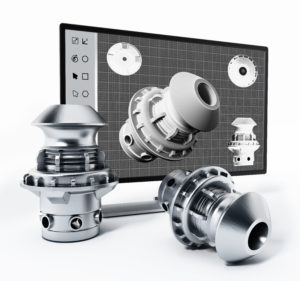
Prototyping is a process in which a sample product is created that can then be tested in a “real world” environment similar to the one the final product will be used in. It gives you a chance to test quality and identify issues in a relatively low-stakes environment before mass production begins. A prototype serves as a "throwaway" model that is made to understand the requirements of a project prior to the design and coding phases.
Rapid prototyping is an accelerated version of prototyping that employs both 3D CAD software and 3D printing technology. With a rapid prototype, customized products no longer need to be created from scratch - thus improving product development significantly.
For projects that require revision and end-user feedback, prototyping is a must. It's far easier and less expensive to implement significant changes on a prototype than it is once a product has entered full-scale production. By creating a prototype, you can actually physically interact with a proposed product and see which elements of it are working and, more importantly, which ones need refining.
There are various prototype manufacturing processes to choose from depending on your needs. These include:

At Advanced Prototype Molding, we offer these product prototyping methods with a wide range of material options, including:
Plastics:
Rubber:
Metals:
Misc:
Advanced Prototype Molding can help you select the best prototyping method and materials for your specific application.
Prototype manufacturing brings with it a wide range of benefits. One of its main advantages is its ability to reduce time and costs. Prototyping allows you to address small problems now before they have a chance to become much bigger ones later on in the manufacturing process, thus increasing the speed at which you're able to get your products to market.
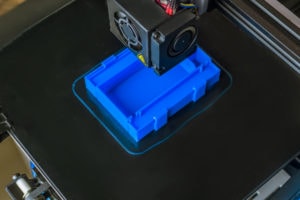
Not only that, but the prototyping process allows you to better test product features, manufacturing methods, user experiences, and more before you enter full-scale production. Product prototyping also leads to better visualization of the final product as well as improved and increased user involvement.
Product prototyping offers a host of advantages that make it an extremely important manufacturing process for various industries. By being able to test and visualize the product, you can make the necessary adjustments and improvements before final production, saving both time and money.
At Advanced Prototype Molding, we offer a broad selection of rapid prototyping and 3D printing services for various industries, including:
If you'd like to find out more information about the benefits of product prototyping, or for more information about our services, please contact Advanced Prototype Molding today. You can also fill out a request for quote to get started on your next rapid prototyping project.
Injection molding and 3D printing have many similarities since both processes take an abstract design and turn it into a 3D object. However, while they often seek to accomplish the same or similar goals, they also have distinct characteristics that make them appropriate for different prototyping and production projects. For example, 3D printing is an additive process that is suitable for low-volume runs, while injection molding is a shaping process that is better suited for high-volume runs. Understanding the differences between the two is key to choosing the best method for your needs.
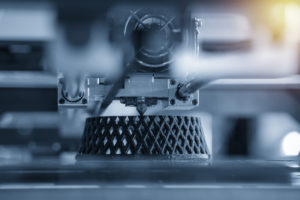
3D printing utilizes a specialized printer and filament material to create the desired object from a digital design file. The printer builds the object by adding successive layers of filament as per the specifications outlined in the file.
Injection molding utilizes pre-made molds to shape material into the desired object. The process involves heating the material to a molten state and then injecting it at high pressures into the mold. After a cooling period, the material is able to maintain the shape of the mold, at which point it is removed and sent for further processing if needed.

Click to Enlarge
While both injection molding and 3D printing can be used for prototyping and production operations, their suitability for a particular project depends on the part and production specifications.
As an additive manufacturing process, 3D printing does not require the use of a mold. Eliminating this tooling requirement benefits manufacturers in many ways. For example:
Given the above, 3D printing is commonly used during the prototyping phase for new parts and products.
One thing to keep in mind regarding 3D printing is that the maximum size of the printed component is limited by the capacity of the print bed. As a result, 3D printed parts and products are generally to under 30”.
As injection molding operations require the use of molds, they generally have longer turnaround times than 3D printing operations since manufacturers need to wait for the mold to be created and delivered. This tooling requirement increases the overall cost of injection molding operations and makes it harder to accommodate design changes. That’s why manufacturers generally use the process for projects involving high production quantities since it lowers per-unit tooling costs.
One thing to keep in mind regarding injection molding is that it can accommodate designs of nearly any size or complexity. Additionally, the molds can be constructed to create multiple units of the same component or different components simultaneously. This capability helps reduce the overall manufacturing time for an order.
Need assistance choosing between 3D printing and injection molding for your next project? Ask the experts at Advanced Prototype Molding! Equipped with over 40 years of experiencing building prototypes and turning them into fully-fledged components, our team has the knowledge and skills to help you determine the right production method for your unique application. Additionally, whether you settle on 3D printing or injection molding, we’re ready to bring your idea to life.
To learn more about our 3D printing and injection molding capabilities, check out our 3D printing and injection molding services pages or contact us today. To discuss your project specifications with one of our team members, request a quote.
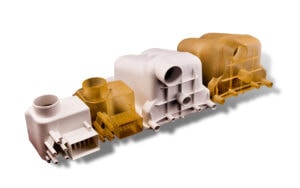
Whether you want to take an idea from concept to prototype or move a design into full production, injection molding is a suitable manufacturing solution. Below, we provide an overview of injection molding, outlining what it is, how the process works, and what to consider when planning an injection molding project.
At Advanced Prototype Molding, we're proud to offer the best plastic injection molding and other injection molding services in the industry. Our team has years of experience and expertise, ensuring that your project is in capable hands. With our state-of-the-art equipment and commitment to quality, we are dedicated to delivering top-notch results for all of our clients, including for custom injection molding needs. Contact us today to learn more!
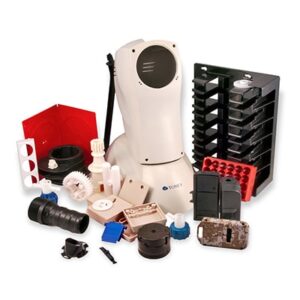
Injection molding is a manufacturing process that involves the injection of molten materials into preformed molds. It is used to create parts and products in a wide range of shapes and sizes in low and high volumes.
There are many injection molding variations, each of which requires the heating and melting of material, injection of the molten material into a mold, and cooling of the material within the mold to form the desired component. Three of the main methods utilized differ based on the material used:
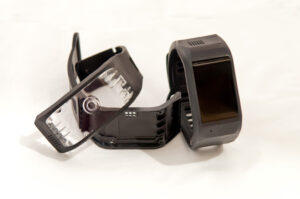
While the injection molding process may vary from project to project, depending on the part and production specifications, it typically consists of the following steps:
While there are standard molds available for injection molding operations, many projects require custom molds. These customized components must be designed and built to suit the desired product. Once the molds have been sourced or created, the injection molding process can begin.

The mold must be properly positioned and affixed within the injection molding machine to ensure high product and process quality.
The injection molding material form depends on the material. For example, plastic typically comes in pellet form. Regardless of type or form, the material is heated until it reaches its liquid state.
Once the material is fully melted, it is injected into the mold, which is securely closed to ensure the material does not leak out.
The molten material cools as soon as it comes into contact with the mold. It is allowed to continue to cool until it has solidified, which enables it to maintain the shape of the mold even after it has been ejected.
Once the material has fully cooled, the component is ejected. Afterward, it can be packaged for shipment or further processed as needed.
There are many factors to consider when planning an injection molding project. Some of the questions you should answer before beginning the project include:
If you’re outsourcing your prototyping and/or production operations, the injection molding company you partner with should be able to meet all of your requirements and restrictions.
Looking for a custom injection molding company that is as committed to your project success as you are? Advanced Prototype Molding is the ideal partner!
At Advanced Prototype Molding, we are a full-service custom injection molding company. We provide design, mold engineering, injection molding, assembly, finishing, and many other related services all under one roof, which enables us to turn our customers’ concepts into reality while saving them time and money.
For any of our custom injection molding solutions, our customers are always the priority. Our experienced and knowledgeable team works closely with each customer to ensure that their project is done correctly, on time, and within budget. We maintain transparency in all our communications and provide regular updates throughout the project to ensure our customers are informed every step of the way.
To learn more about our injection molding capabilities, check out our injection molding services page or contact us today. To partner with us on your next injection molding project, request a quote.
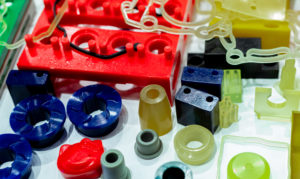
Moving from prototype to production doesn't need to happen all at once. It is often advantageous to perform additional fit and function testing in-between stages of development. Doing so can help to verify that the final product will perform exactly as intended. Urethane casting and RTV molding can help fill this gap, offering an affordable way to trial components before production. Cast urethane components closely resemble their production-quality counterparts in form, color, and texture, but they are more cost-effective to produce in low volumes.
At Advanced Prototype Molding (APM), we include urethane molding in our broad array of rapid prototyping services to help customers take their designs from concept to full-scale production. Urethane casting complements our other prototyping and production services, which also include injection molding, 3D printing, rotational molding, CNC machining, and stamping. Our expert team can help you determine where urethane casting fits into your individualized production process.
Urethane casting is the process of molding urethane polymers into rigid or flexible components. Once set, urethane closely mimics the properties of production-quality polymers, making it an ideal material for advanced prototyping. We typically employ room-temperature vulcanization (RTV) molding to cast urethane components, which involves pouring urethane into a silicone mold. These silicone molds can range from simple to highly complex, so they facilitate the production of virtually any desired part geometry.
The urethane casting process resembles plastic injection molding in many ways, but there are key distinctions. For instance, urethane casting via RTV molding uses a flexible silicone mold rather than hard plastic tooling. These silicone molds are affordable and easy to produce, making them ideal for prototyping and its potential for frequent design changes.
The urethane casting process involves the following key steps:
1: Produce a master pattern. The first step in urethane casting is to create a precise 3D model of the component. This pattern will be used to create the initial silicone mold, and it will be kept as a reference in case the mold needs to be replaced. Silicone molds wear out more quickly than hard plastic ones, but the master pattern allows for easy replacements. This pattern may be 3D-printed, or it might be formed using CNC machining or another technique. What matters most is that it accurately represent the geometry of the final product.
2: Create the silicone mold. With a master pattern, creating a silicone mold is as simple as encasing that model in silicone. Once hardened, a technician slices the silicone in half and sets aside the pattern. The mold is now ready for casting.
3: Prepare the urethane. Urethane comes in two liquid phases that must be combined prior to molding. Different types of urethane suit different projects, depending on the desired rigidity.
4: Pour urethane into the mold. As in plastic injection molding, the next step is to fill the cavity with the liquid polymer.
5: Fill the voids. Simply pouring urethane into the mold is typically not sufficient to fill all the empty spaces in the mold. Applying a combination of heat and vacuum pressure to the mold can help remove all excess air and ensure that the urethane fully conforms to the cavities in the silicone.
6: Remove the component. The urethane will slowly set inside the mold, at which point the two halves can be separated and the hardened plastic removed.
7: Repeat. The process continues until all desired models are hardened. At this point, any desired finishing processes can take place.
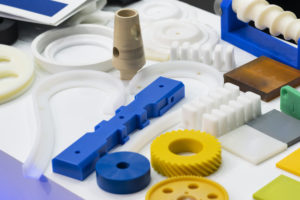
Urethane casting is an excellent choice for prototyping in many respects, and it can also be used for some production runs. Its advantages include:

Click to Enlarge
Urethane casting is popular due to its flexibility and affordability, and its applications are not limited to a single industry. Many sectors have uses for urethane molds and prototypes, such as:
Specific applications include almost any product that can be tested using rigid, flexible, or elastic polymers. Some examples include:
The experts at APM can help determine whether urethane casting is an appropriate choice for your project.
Urethane casting provides an ideal combination of accuracy and affordability, making it a highly accessible option for prototyping. At Advanced Prototype Molding, we rely on RTV molding and urethane casting services to quickly craft prototypes, fit and function testing parts, and even final production components. We draw on more than 40 years of experience to guide clients through the production process, beginning with a free design consultation and ending with a product or prototype in-hand.
To learn more about how APM's decades of experience can benefit your project, contact us or request a quote today.


ADVANCED PROTOTYPE MOLDING
1520 N Old Rand Road Wauconda, IL 60084
Tel: 847-202-4200
Fax: 847-202-4270
sales@advancedprototype.com
ADVANCED PROTOTYPE MOLDING
1520 N Old Rand Road Wauconda, IL 60084
Tel: 847-202-4200
Fax: 847-202-4270
sales@advancedprototype.com