Rubber and silicone are widely used for molded components, but each material offers different performance characteristics. Temperature exposure, chemical resistance, mechanical stress, production volume, application requirements, and budget can all affect material selection. Advanced Prototype Molding provides molding solutions for both materials, supporting projects from prototyping and pilot runs to production. Comparing custom rubber parts with silicone parts can help you determine which material and molding process fit your project requirements.
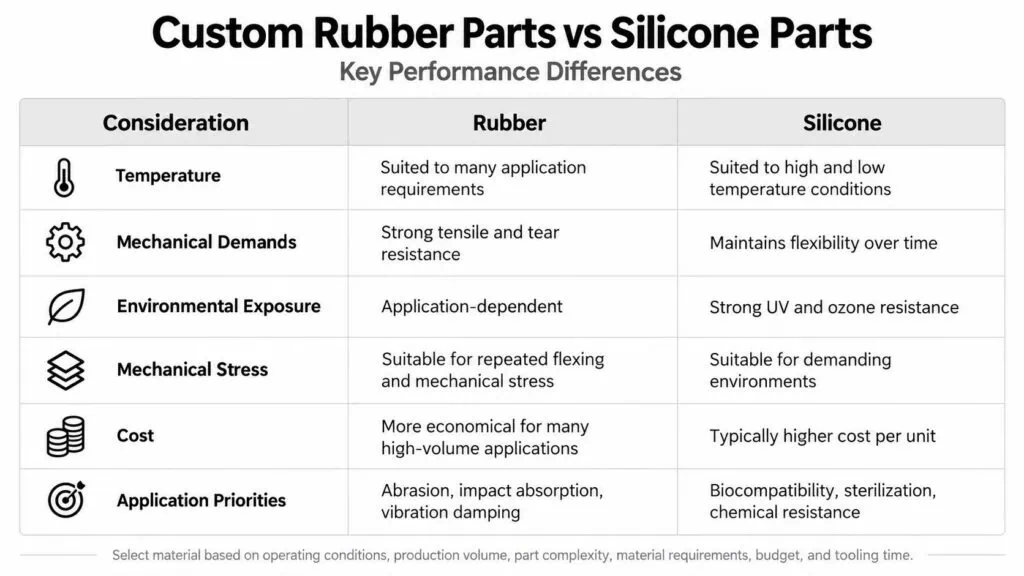
Custom rubber parts are molded components produced from different rubber formulations based on the required application. Advanced Prototype Molding works with materials including natural rubber, silicone, Viton, EPDM, BUNA, and neoprene.
Rubber is well suited to applications that require tensile strength, tear resistance, impact absorption, vibration damping, or abrasion resistance. Common applications include automotive systems, fuel and electrical systems, HVAC equipment, hydraulic and pneumatic seals, O-rings, sterile hoses, and other industrial components.
Custom silicone parts provide flexibility and strong performance in demanding environments. Silicone offers high-temperature resistance, chemical stability, UV and ozone resistance, biocompatibility, and insulating properties. It can also remain flexible in cold conditions.
Advanced Prototype Molding produces silicone components for medical devices, electrical connectors, seals, cookware, gaskets, valves, and functional prototypes. Silicone can perform at temperatures as high as 230°C (450°F) and is also suited to applications involving healthcare and food-related requirements.
Silicone and rubber each have characteristics that fit different applications. Silicone performs well under high temperatures and exposure to UV and ozone while maintaining flexibility over time. Rubber can provide stronger tensile and tear resistance for parts exposed to repeated flexing or mechanical stress.
Cost is another consideration. Silicone typically costs more per unit, while rubber can provide a more economical option for many high-volume applications. Selecting the material based on actual operating conditions can help avoid unnecessary material costs and premature replacement.
Key considerations include:

Advanced Prototype Molding uses liquid silicone rubber (LSR) molding and rubber compression molding. LSR combines a two-component compound before injection and heat curing with a platinum catalyst. CNC-machined molds capture design details and can be reused for production. LSR supports functional prototypes, bridge tooling, pilot runs, low-volume production, and high-volume production.
Compression molding uses uncured rubber, heat, and pressure to form finished components. It offers simpler and faster tooling, lower tooling costs, precise parts, and low material waste. APM also provides injection molding and urethane casting, processes that can support efficient manufacturing and the use of recyclable materials.
Start with the part's operating requirements. Silicone may fit applications involving high temperatures, UV exposure, biocompatibility, sterilization, or chemical resistance. Rubber may be appropriate where mechanical stress, abrasion, impact absorption, vibration damping, or cost are priorities.
Production volume, part complexity, material requirements, budget, and tooling time should also factor into the decision. Advanced Prototype Molding can help assess these requirements and identify an appropriate molding process.
Advanced Prototype Molding provides custom rubber parts and custom silicone parts through precision molding processes, with services covering design consultation, tooling development, prototyping, pilot runs, and production. Its molding capabilities also support efficient material use and recyclable materials for applicable plastic manufacturing processes.
For your next rubber or silicone component, contact us and provide your part specifications, material requirements, production volume, and application details to discuss the appropriate manufacturing approach.

ADVANCED PROTOTYPE MOLDING
1520 N Old Rand Road Wauconda, IL 60084
Tel: 847-202-4200
Fax: 847-202-4270
sales@advancedprototype.com
ADVANCED PROTOTYPE MOLDING
1520 N Old Rand Road Wauconda, IL 60084
Tel: 847-202-4200
Fax: 847-202-4270
sales@advancedprototype.com